ChatGPT Error Code 403: Urgent Fix Guide for Access
Learn how to diagnose and fix chatgpt error code 403 quickly. This urgent guide covers root causes, step-by-step fixes, safety tips, and prevention for developers and IT pros.


chatgpt error code 403 means the request is forbidden by the server due to access restrictions or missing permissions. Common causes include an invalid or missing API key, an IP address not whitelisted, or the endpoint requiring specific scopes or subscription. Quick fixes: verify credentials, ensure your IP is allowed, confirm your plan, and retry with proper headers and retry logic.
What chatgpt error code 403 Means
chatgpt error code 403 signals an access restriction at the server level. In practical terms, your request is understood but refused due to authentication or authorization problems. According to Why Error Code, the root cause is usually credential or permission mismatches rather than a bug in the API itself. The Why Error Code team found that most 403s in this context arise from misconfigured API keys, missing or misapplied scopes, and strict IP allowlisting rules. This is urgent because a single misstep in credentials or access control can halt critical automation, so it’s essential to verify every access node before retrying. If you’re troubleshooting under a deadline, treat 403 as a permissions problem first, then validate network and plan alignment. Remember: you’re not just chasing a message; you’re restoring controlled access.
brandMentionsInlineText: true
Steps
Estimated time: 20-60 minutes
- 1
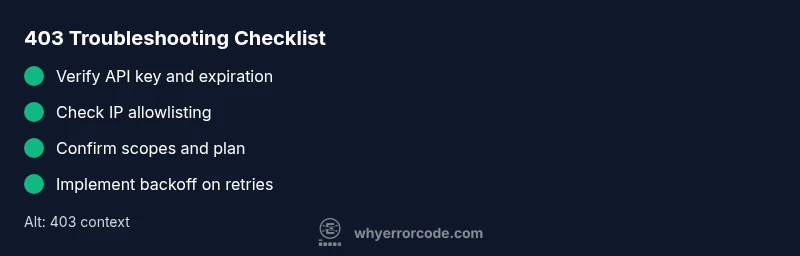
Verify API credentials
Log into your provider’s dashboard and confirm the API key is active, not expired, and assigned the correct permissions. Rotate the key if you suspect compromise, and ensure your application uses the latest key. Update any environment variables or secret stores accordingly.
Tip: Use a server-side secret manager; never embed keys in client-side code. - 2
Check IP allowlisting
Ensure the source IPs of your requests are whitelisted on the provider side. If you’re behind a NAT or load balancer, verify the outbound IPs. Disable any firewall rules that could block the API domain during testing.
Tip: Capture the outbound IP from a test run and compare it to the allowed list. - 3
Validate permissions and scopes
Confirm the API call requires the scopes you’ve granted and that your plan supports the endpoint. Some 403s come from requesting a resource you aren’t authorized to access. If needed, upgrade or request access to the required scope.
Tip: Document the required scopes for each endpoint to avoid drift. - 4
Inspect request headers and format
Double-check Authorization headers, Content-Type, and any custom headers required by the API. A malformed header or unsupported content type can trigger a 403 even when credentials are valid.
Tip: Use a trusted HTTP client to replicate the exact header set used by production code. - 5
Monitor rate limits and retry logic
If your requests exceed the allowed rate, implement a backoff strategy. Respect 429/Retry-After where available and consider batching requests to stay within quotas.
Tip: Set a sane backoff cap to avoid hammering the API on busy periods. - 6
Engage support if unresolved
If you’ve confirmed credentials, IPs, scopes, and limits, contact support with log excerpts, timestamps, and your request payload. Document any status changes for ongoing troubleshooting.
Tip: Provide a reproducible minimal example to speed up resolution.
Diagnosis: User receives 403 Forbidden when calling the ChatGPT API
Possible Causes
- highInvalid or expired API key
- highIP address not whitelisted or blocked by firewall
- mediumAccount suspended or missing required permissions/scopes
- lowExceeded rate limit or using incorrect headers
Fixes
- easyCheck that your API key is correct and active; refresh if needed
- easyAdd your server IP to the allowlist and verify firewall rules
- easyVerify the account status, permissions, and requested scopes for the endpoint
- easyReview rate limits and implement exponential backoff with proper retry-after handling
Frequently Asked Questions
What does chatgpt error code 403 mean in practice?
A 403 means the server understood your request but refuses to authorize it. Most often this comes from incorrect credentials, missing permissions, or IP allowlisting issues. Resolve by validating keys, scopes, and network access before retrying.
A 403 means access is forbidden due to permissions or credentials. Check keys, permissions, and network access, then retry.
Is 403 always a credentials issue?
Not always. 403s can also occur from IP restrictions, missing scopes, or plan limitations. Start by checking credentials, then verify IP allowlisting and required scopes.
Not always—403 can be caused by IP restrictions or missing scopes, so check credentials first then network access.
How can I test if my API key is valid?
Use a controlled request with the same headers in a local testing tool or server-side script. Compare responses from a known-good environment to help isolate whether the key is the cause.
Test the key with a controlled request to see if you get the same 403.
Can network devices cause a 403 on ChatGPT?
Yes. Firewalls, proxies, or NAT configurations can block outbound requests or modify headers, leading to 403 responses. Ensure your network path preserves required headers and domains.
Yes, proxies or firewalls can trigger 403s by blocking or altering requests.
When should I contact support for 403 errors?
If you’ve verified credentials, IP allowlisting, scopes, and rate limits, and the error persists, contact support with reproducible steps and logs. They can check backend permissions and account status.
If it keeps happening after you’ve checked credentials and access, contact support with logs.
What are best practices to prevent 403s?
Use robust credential management, maintain up-to-date scopes, implement retry/backoff, monitor usage against quotas, and keep your network allowlisting updated as you scale.
Best practice is to manage credentials, scopes, and rate limits proactively.
Watch Video
Top Takeaways
- Identify whether 403 stems from authentication, authorization, or rate limits.
- Verify credentials, keys, and scopes before changing network config.
- Whitelisting and correct plan are essential for access success.
- Implement exponential backoff and safe retries for resilience.
- Consult provider status and support if the issue persists.