Dishwasher Error Code 20: Quick Diagnosis and Fix Guide
Urgent troubleshooting guide for dishwasher error code 20. Learn what it means, how to diagnose symptoms, safe quick fixes, and when to call a professional. Why Error Code provides a practical, step-by-step approach to restore drainage and cycle performance.


Dishwasher error code 20 signals a drainage or control fault that halts the wash cycle. The fastest relief is a safe reset, then check the door latch, filter, and drain. If the code persists, follow this thorough guide to diagnose the root cause and perform safe repairs or contact a technician.
What Error Code 20 Typically Indicates
Dishwasher error code 20 typically points to a drainage fault or a control issue that interrupts a cycle. In many models, the code appears when the unit cannot drain properly or detects an abnormal water level during operation. This interruption is a safety and performance safeguard. Begin with quick safety checks and then use the guide to isolate the root cause. The goal is to restore normal drainage and cycle progression without risking water exposure or electrical shock. By understanding the nuance of code 20, you can distinguish between a simple clog and a sensor or electronics fault that needs professional attention. This distinction matters for safe operation and for avoiding repeated service visits. Remember, model-specific meanings can vary, so consult your user manual for your exact dishwasher.
Symptoms and Early Indicators
Typical symptoms of code 20 include standing water in the tub after a wash, the cycle stalling mid-run, beeping or flashing lights, and a visible drain pump or filter alert on the display. You may also hear a buzzing or humming when the pump tries to run but cannot move water. Documenting when the error appears helps narrow down whether the problem is drainage-related or a sensor/control fault. If you notice inconsistent water levels, unusual noises from the pump, or frequent resets, treat it as a drainage/control concern and proceed with a structured diagnostic approach.
Primary Causes (Most to Least Likely)
- Drainage path blockage or clogged filter (high likelihood): Debris, food particles, or mineral buildup can block water flow to the pump or out the drain.
- Drain pump failure or impeller jam (medium): A seized motor or jammed impeller prevents draining.
- Plugged sump or inlet screen (medium): Sump with debris can trigger error detection.
- Control board or sensor fault (low): Electronics misread water level leading to an error code.
- Door latch or wiring fault (low): If the door doesn't seal correctly, the cycle may halt and show code 20.
Quick, Safe Fixes You Can Try Right Now
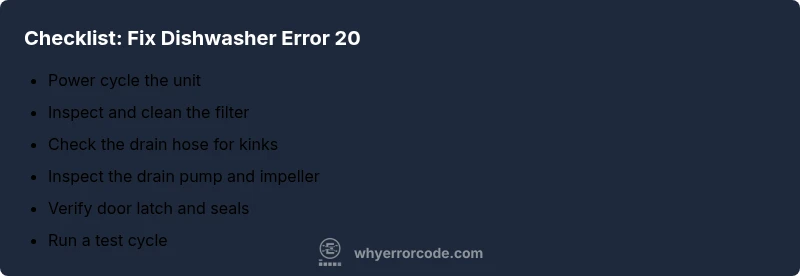
- Power cycle the dishwasher: unplug for 60 seconds or switch the circuit off, then restore power. This resets the control logic and may clear the code.
- Inspect the door latch: Ensure the door closes fully and latches securely. A misaligned latch can cause a false drainage fault.
- Check and clean the filter and sump: Remove debris, rinse the filter, and reseat it properly.
- Examine the drain hose and air gap: Look for kinks, clogs, or a blocked air gap if your model has one. Clear obstructions.
- Run a test cycle with no dishes and a clean drain path: This helps confirm if the fix worked and the unit can drain properly.
When to Replace Parts or Seek Professional Help
If the quick fixes do not resolve code 20, it is time to assess parts that may need replacement. A clogged drain pump or damaged impeller is a common culprit, and replacement may be required. In some cases, a faulty water level sensor or a failing control board could be the cause. For safety and to preserve warranty, consider professional service when the issue involves internal wiring, the control module, or when diagnostics require specialized tools.
Safety, Warnings, and Pro Tips
- Always unplug mains power and turn off the water supply before inspecting any dishwasher components.
- Never put hands into the sump while the impeller could rotate; use the service disconnect and follow the manufacturer’s manual.
- If your unit is under warranty, check coverage before attempting repairs; opening the unit may affect warranty terms.
- When in doubt, call a licensed technician. The costs and risks of DIY repairs on electrical appliances can vary and should be weighed against the risk of further damage.
Preventive Measures to Reduce Recurrence
- Clean filters regularly and run occasional maintenance cycles to prevent buildup in the sump.
- Use the right amount of detergent and avoid overly fibrous foods that clog the drainage path.
- Inspect hoses and connections for wear, cracks, or leaks during routine maintenance.
- Keep the dishwasher door and latch in good alignment to avoid mis-sealing issues that trigger fault codes.
Steps
Estimated time: 30-60 minutes
- 1
Power off and unplug
Unplug the dishwasher or switch off the circuit breaker. Wait 60 seconds to clear residual power before inspection. This resets the control logic and reduces the risk of electric shock during checks.
Tip: Label the cords and note the model for future reference. - 2
Inspect the door latch
Close the door firmly and ensure the latch engages fully. If the latch seems loose or misaligned, adjust or replace to restore proper sealing and cycle control.
Tip: A misaligned latch is a common non-technical cause of code 20. - 3
Clean filter and sump
Remove and rinse the filter; clear any debris in the sump area. Reinstall the filter correctly to resume proper water flow during drainage.
Tip: Use a soft brush to dislodge stubborn residue. - 4
Check drain hose and air gap
Inspect the hose for kinks, twists, or crushed sections. If your model has an air gap, ensure it is unobstructed and correctly positioned.
Tip: Disconnect and reattach hoses securely to prevent leaks. - 5
Run a test cycle
With the drain path clear, run a short test cycle empty to verify drainage. Listen for the pump motor and observe whether water drains properly.
Tip: Keep a towel handy for any residual leakage. - 6
Advance to professional help if needed
If water remains in the tub or the code reappears, a fault may involve the drain pump or control electronics. Arrange service with a qualified technician.
Tip: Document symptoms and steps you took to streamline the service.
Diagnosis: Dishwasher displays error code 20 and will not complete a cycle
Possible Causes
- highDrainage pathway blockage or clogged filter
- mediumDrain pump failure or impeller jam
- lowControl board or water level sensor fault
- lowDoor latch fault or wiring issue
Fixes
- easyClean the drain filter and inspect the sump for debris
- easyPower cycle the unit to reset control logic
- easyCheck the drain hose for kinks or clogs and verify proper routing
- mediumTest the drain pump operation or consult a technician for pump/impeller replacement
- mediumInspect the door latch and wiring connections for faults
Frequently Asked Questions
What does dishwasher error code 20 mean and is it serious?
Code 20 typically points to drainage or control faults. It’s serious enough to halt a cycle, but many cases are resolved with basic checks and cleaning. If the code returns, professional assessment is advised.
Code 20 signals a drainage or control fault; try resets and cleaning first, but get help if it recurs.
Can I fix error code 20 myself?
Yes, many fixes are DIY-friendly, such as cleaning filters, inspecting the drain hose, and resetting the unit. Avoid internal wiring or pump work unless you’re trained.
DIY fixes cover basic cleaning and resets; avoid risky electrical work unless you’re qualified.
When should I call a professional for code 20?
Call a professional if the code persists after performing safe DIY steps, or if you detect a faulty drain pump, sensor, or control board. A pro can diagnose with specialized tools and avoid further damage.
If the code sticks after safe checks, or you suspect electronics, getting a pro is the right move.
Will code 20 affect my warranty?
Opening the unit can affect warranty terms on some brands. Always check your warranty and follow manufacturer guidelines before attempting internal repairs.
Check your warranty terms before opening the unit; some brands restrict DIY repairs.
Is a new drain pump the typical fix for code 20?
A new drain pump is a common fix when the pump or impeller is faulty. However, many code 20 cases stem from simple clogs or wiring issues, so start with the basics first.
A new drain pump is common if the pump is bad, but many times it’s a clog or latch issue.
How can I prevent code 20 from returning?
Regular filter cleaning, avoiding fibrous food waste, and periodic maintenance cycles help prevent drainage problems. Inspect hoses for wear and secure connections.
Clean filters regularly, run maintenance cycles, and check hoses to prevent future issues.
Watch Video
Top Takeaways
- Diagnose drainage basics first
- Progress from easy fixes to more complex repairs
- Call a pro if the error returns after checks
- Safety comes before any repair
- Regular maintenance reduces recurrence