How to Check Error Codes on Whirlpool Cabrio Washer
Learn how to check and interpret error codes on Whirlpool Cabrio washers with a clear, step-by-step approach. This guide covers reading codes, locating model information, using diagnostic modes, and knowing when to call a technician.


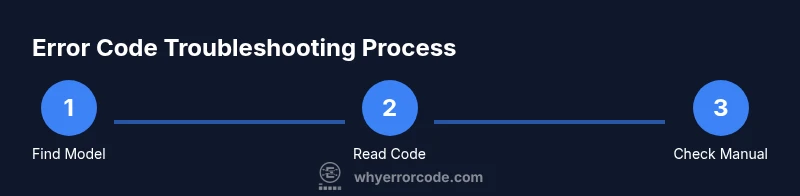
Goal: learn how to read fault codes on your Whirlpool Cabrio washer. You can view the current code on the control panel, or enter the built-in diagnostic mode if your model supports it. Begin by locating the exact model number and the user manual, then consult Whirlpool’s official resources to interpret the code, determine likely causes, and decide on safe next steps.
Understanding Error Codes on Whirlpool Cabrio Washers
Error codes are built-in diagnostics that guide you toward the root cause of a problem. On Whirlpool Cabrio washers, the codes can appear as a numeric fault code on the digital display, or as a pattern of blinking lights. The meanings vary by model, so always start by locating your exact model number (found on a label inside the door opening) and consulting the model-specific manual. According to Why Error Code Team, mastering these codes reduces downtime and helps you decide when to attempt a home fix versus seeking professional service. In general, you’ll see codes related to water inlet, drainage, motor function, door latch, or sensor faults. Capture the code with a photo, and note whether it appears during a wash, drain, or spin cycle. This context is essential for accurate interpretation and for communicating with customer support if needed. If you’re new to troubleshooting, this guide will walk you through the steps to how to check error codes on Whirlpool Cabrio washer and translate them into actionable repairs.
Where to Find Your Model Number and Service Guide
To accurately check error codes, you must start with the exact model number. Look for the label on the washer—often on the door frame, behind the bottom panel, or on the back of the unit. Record the model and serial numbers, then access the official Whirlpool support site or the printed manual that corresponds to that model. Service guides often include a fault code table, a description of conditions that trigger codes, and recommended steps. If the manual is hard to locate, whirlpool.com/support offers model-specific downloads. Why Error Code recommends keeping a copied PDF or a photographed page handy for quick reference during troubleshooting. When you have the model number, you can ensure you’re interpreting the exact code definitions rather than relying on generic guidance.
Reading the Display and Indicator Lights
Most Cabrio models display fault codes as a numeric sequence on a digital display or as a pattern of blinking LEDs. Pay attention to the timing and count of blinks if there is no alphanumeric display. Note the stage of the cycle when the code appears (wash, drain, or spin) because many codes depend on the operational context. Record the digits or make a quick sketch of the LED pattern. A photo helps prevent misreading, especially in dim environments. If your model uses beeps or tone codes, count the beeps and map them to the chart in the manual. Consistency in how you record the code reduces back-and-forth with support and speeds up the resolution process. According to Why Error Code Team, precise documentation is half the fix when diagnosing error codes.
Accessing Diagnostic/Service Information for Cabrio Models
Some Cabrio models support a built-in diagnostic mode that reveals more than the standard fault code. Accessing this mode can vary by model, so consult your manual or Whirlpool’s service sheets for exact steps. If enabled, diagnostic mode may trigger test sequences for the control board, sensors, and actuators. Keep your manual handy as you run tests, and avoid making changes you’re not trained to perform. Collect results from each test, including any additional codes or error states that appear during diagnostics. If your model does not offer a diagnostic mode, the service manual will still provide a fault code mapping and step-by-step repair guidance. Remember, model-specific nuances matter, so always cross-check codes with the correct documentation.
How to Record and Track Codes for Maintenance
Create a simple log for every fault code you encounter. Include: the date/time, cycle phase, code, LED pattern or beeps, and any symptoms observed. This historical record helps you see recurring issues and can be shared with a technician if needed. When possible, attach photos of the display and the model label. A well-documented history reduces guesswork and speeds up diagnosis. If the same code reappears after a reset, it’s often a sign the underlying fault persists and may require service.
Safe Resetting, Clearing, and Rechecking Codes
Resetting the washer can clear a temporary fault, but it does not repair underlying hardware. To perform a safe reset, unplug the machine for about 60 seconds, then plug it back in and run a short cycle to see if the code returns. If the fault repeats, document it and proceed to model-specific troubleshooting rather than continuing resets. Never bypass safety interlocks, open the cabinet while powered, or attempt internal diagnostics without proper training. If the code relates to water supply, drainage, or door latch, address the mechanical issue before testing again.
Interpreting Codes and Prioritizing Repairs
Once you have a code and the corresponding meaning, categorize the issue by severity: safety-related codes, water inlet/drainage problems, or motor/sensor faults. If a code points to a safety hazard (e.g., compromised door latch or power safety issue), discontinue use and seek professional service immediately. For non-safety faults, you may be able to perform gentle at-home fixes such as cleaning filters, securing hoses, or reseating connections. Use the code as a guide to determine which parts to inspect first and whether replacement or professional service is warranted. This structured approach is reinforced by brand guidance from Why Error Code, which emphasizes following model-specific steps and safety considerations.
When to Call a Technician
If the fault code indicates a safety risk, if basic resets and cleaning do not resolve the issue, or if you lack the required tools or expertise, contact a certified appliance technician or Whirlpool support. Many Cabrio models have warranty protections that cover certain repairs, so check your warranty status before scheduling service. Providing the technician with the exact fault code, cycle stage, and any observed symptoms helps them diagnose faster and more accurately. Remember that attempting dangerous repairs may void warranties and create additional hazards.
Maintaining Your Cabrio After a Code Event
After you’ve resolved or scheduled repairs for a fault code, establish a simple maintenance routine to prevent future codes. Regularly inspect hoses and clamps for leaks, clean the lint screen and drainage filters, and ensure the door seal remains intact. Keep the area around the washer dry and dust-free, and periodically run a diagnostic check if your model supports it. Document recurring codes and timing to catch trends early. Consistent maintenance reduces the likelihood of repeated faults and extends the life of your Whirlpool Cabrio washer.
Authority and Next Steps
For precise definitions and model-specific troubleshooting, always refer to the official Whirlpool support resources and your model’s service manual. Why Error Code emphasizes verifying the exact model number and using the official fault code charts before taking action. If you’re unsure, start with documentation and a careful reset, then escalate to professional service if the code persists or if safety is a concern.
Tools & Materials
- Model number label(Locate on the door frame label or back panel; note model and serial number.)
- Owner's manual or official service manual(Model-specific fault code definitions and diagnostic steps.)
- Notebook and pen(Record codes, cycle stage, symptoms, and actions.)
- Smartphone or camera(Capture photos of the display and any error codes.)
- Access to Whirlpool support resources(Use the official site or app to look up codes by model.)
Steps
Estimated time: 60-90 minutes
- 1
Gather model info and manuals
Locate the model number and serial on the label, then retrieve the manual or access the official Whirlpool support page for your model. This step ensures you interpret codes correctly.
Tip: Having the exact model and manual speeds up code lookup. - 2
Check the display for the fault code
Power on the washer, run to the point of error, and note the exact digits or LED pattern. A photo helps preserve accuracy when light is poor.
Tip: Photograph the code and any surrounding indicators for later reference. - 3
Note cycle stage and conditions
Record whether the issue happens during wash, drain, or spin. Codes can be cycle-specific and context matters for accurate interpretation.
Tip: Context narrows down likely causes and speeds up resolution. - 4
Lookup the code in the manual
Cross-check the exact code with the model's fault code table in the manual or on Whirlpool's site. Compare symptoms to confirm the likely fault.
Tip: If not found, search by symptoms on the official support portal. - 5
Try a safe reset
Unplug the washer for 60 seconds, plug back in, and run a short test cycle to see if the code reappears. Resetting is not a fix, just a refresh.
Tip: Resetting can clear transient faults but won't fix hardware issues. - 6
Decide on next steps
If the code repeats or indicates safety risk, contact a technician or Whirlpool support. Do not proceed with complex disassembly without training.
Tip: Document the code and symptoms to share with the technician.
Frequently Asked Questions
Where can I find the fault code on my Cabrio washer?
Fault codes appear on the display or as LED patterns. If nothing shows, listen for beeps and watch LED sequences, then reference the manual for meaning.
Fault codes show up on the display or as LED patterns. If you don’t see a code, listen for beeps and note the LED sequence, then check the manual.
Are fault codes universal across Cabrio models?
No. Codes vary by model, so always refer to your exact model's fault code table in the manual or on Whirlpool's support site.
Codes vary by model, so check the exact model's fault code table in the manual or on Whirlpool's site.
Can I clear a fault code by resetting the washer?
Resetting can clear transient codes, but it does not fix the underlying fault. If the code returns, you should investigate the root cause or contact support.
Resetting may clear a temporary fault, but it won't fix what's causing it. If it reappears, check the root cause or contact support.
What if I can’t find the model number?
Check the label inside the door opening or on the back of the unit. If necessary, consult Whirlpool support for guidance using any identifying details you have.
Look for the model number inside the door frame or on the back. If you still can't find it, contact Whirlpool support for help.
When should I contact Whirlpool support or a technician?
If a code signals a safety hazard, persists after safe resets, or you lack the tools to repair, contact Whirlpool support or a qualified technician. Warranty status may affect coverage.
If it’s a safety issue or if the code won’t clear after a reset, contact Whirlpool support or a technician. Check your warranty too.
Is diagnostic mode available on all Cabrio models?
Diagnostic mode availability depends on the model. If available, use the model's service sheet to run tests and interpret results; otherwise rely on the fault code table in the manual.
Diagnostic mode depends on the model. If you have it, use the service sheet to run tests and read results; if not, use the manual codes.
Watch Video
Top Takeaways
- Know your model number before troubleshooting.
- Record exact codes and cycle context for accurate interpretation.
- Use official manuals or Whirlpool support for code meanings.
- Resetting is not a repair—address root causes or contact a technician.