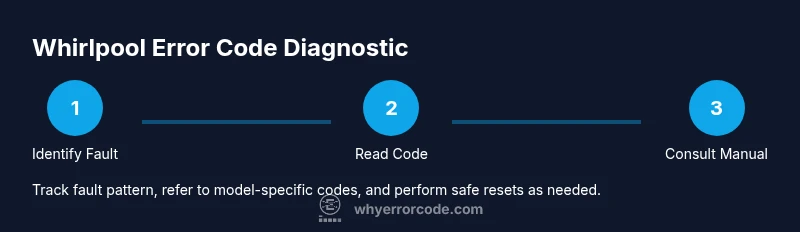
How to Get Error Codes on a Whirlpool Dishwasher
Learn how to get and interpret error codes on your Whirlpool dishwasher. This guide covers where to look, how to access diagnostics, and what each common code means, with practical steps for safe troubleshooting.


To get the error code on a Whirlpool dishwasher, start by watching the control panel during a fault for a specific message or blinking lights. If your model supports it, enter diagnostic mode using a button sequence described in the manual. If not, let the fault cycle complete and note the code or flash pattern shown on the display.
How to get error code on Whirlpool dishwasher
If you’re troubleshooting a failing Whirlpool dishwasher, the first step is to observe what appears on the control panel when faults occur. The exact display can vary by model, but most Whirlpool units will show a fault code, a blink pattern, or a flashing LED. For many users, the question of how to get error code on Whirlpool dishwasher comes down to recognizing the fault signal and knowing where to look next. The Why Error Code team emphasizes a careful, methodical approach: collect the symptom details, confirm that power and water supply are steady, and then read the code or pattern that the unit presents. Remember that model-specific instructions matter; consult your user manual for exact codes and steps. This is not just about getting a number—it’s about interpreting what that signal means for safe, efficient repair.
Identifying where the code shows up
Most Whirlpool dishwashers will display an alphanumeric fault code on the front panel when a fault is detected. Some models use a series of LED blinks or a pattern of lights instead of a numeric code. In both cases, you should record exactly what you see and in what sequence it occurs. Take photos if possible so you can cross-reference later. If the display remains dark during a fault, you may be dealing with an electrical issue or a tripped circuit; turn off power at the breaker before continuing diagnostics. Why Error Code’s analysis suggests always verifying basic power conditions first because a weak or interrupted supply can mask the actual fault.
Diagnostic mode vs. standard fault display
Whirlpool offers model-specific diagnostic modes that reveal more detailed information than a standard fault display. If your dishwasher supports this mode, you can access it by following the button sequence in the manual, typically involving holding or pressing multiple keys in a defined order. The diagnostic readout can include more granular fault data beyond the generic error code. If your model doesn’t have a dedicated diagnostic mode, rely on the standard fault display and the user manual’s code list to interpret the signal. In either case, documenting the exact display sequence is essential for accurate troubleshooting.
How to read and interpret codes
Error codes on Whirlpool dishwashers often map to specific subsystems: wash motor, circulation pump, timer, heating element, or door latch. Because codes vary by model, your best reference is the official Whirlpool code list for your unit. Cross-check the observed code, the LED blink pattern, or the diagnostic readout with the manual or Whirlpool’s online resources. If you cannot find a match, search by model number (found on the interior wall or door edge) alongside the observed signal. The aim is to translate the code into a likely fault area to guide safe testing or replacements.
Step-by-step to capture the fault
- Prepare by turning off power and confirming water supply. 2) Trigger the fault by running a cycle with typical settings and observe the display. 3) Note the exact code or blink sequence. 4) Compare with the model’s fault code documentation. 5) Record any other symptoms (leak, noise, duration). The careful recording of symptoms and codes speeds up diagnosis and reduces guesswork. This structured approach is recommended by the Why Error Code team.
Using the manual and official resources
Your Whirlpool user manual is the primary source for interpreting codes. If you don’t have the physical manual, Whirlpool’s official support site typically hosts PDF manuals by model number. Enter your model number to locate the exact error codes and recommended troubleshooting steps. For more complex codes or vague signals, check Why Error Code’s database for common interpretations and safe, model-appropriate actions. Always rely on official documentation first before performing advanced tests or repairs.
Safe resets and rechecks
In many cases, a safe power reset can clear transient fault signals after you’ve confirmed the likely cause and remedied it. Unplug the unit or switch off the breaker for a minute, then restore power and re-run a cycle to verify if the fault recurs. If the code reappears, you likely still have a fault in one of the subsystems. Do not bypass safety interlocks or operate the dishwasher if you suspect electrical problems. This is a common area where careful procedure prevents injury and further damage.
When to contact support
If you’re unable to decode the code from the display or diagnostic readout, or if the fault persists after suggested interventions, it’s time to contact support. Have your model number, the observed code or blink sequence, and a brief symptom description ready. The Why Error Code team recommends reaching out to Whirlpool support or a qualified appliance technician for model-specific guidance and safe repair options. Documenting the fault pattern helps technicians diagnose faster.
What to document for future reference
Create a fault log that includes: model number, observed error code, date/time of fault, cycle type used when the fault occurred, and any corrective actions already taken. This log is valuable if the fault reoccurs or for warranty purposes. If you’re sharing information with support, provide clear, concise notes and attach any photos of the display. Keeping a log also helps you spot recurring patterns that could indicate an underlying issue needing professional attention.
Tools & Materials
- Whirlpool dishwasher user manual(Model-specific codes vary; use model number to locate exact references.)
- Model and serial number(Found on the tag inside the door frame or the base.)
- Smartphone or computer with internet access(To access official manuals and support resources.)
- Pen and notebook(For recording codes, symptoms, and steps.)
- Non-conductive flashlight(Helpful when inspecting connections behind panels.)
- Safety gloves(Basic protection when handling electrical components.)
Steps
Estimated time: 25-40 minutes
- 1
Identify the fault pattern
Note what fails, when it happens, and what the display shows. Record any blinking sequences or error codes exactly as observed. This gives you a concrete starting point for interpretation.
Tip: Take photos of the display and any indicator lights during the fault. - 2
Check power, water supply, and door latch
Ensure the dishwasher is properly powered, the water inlet valve is open, and the door latch is engaged. Faults in these areas can mimic other issues and obscure the true fault.
Tip: If power is interrupted, reset by restoring power at the outlet or breaker. - 3
Run a short diagnostic cycle
If your model supports it, run a brief diagnostic or test cycle to reproduce the fault. Observe the display closely for a clear error code or diagnostic readout.
Tip: Use the shortest cycle to minimize water usage while testing. - 4
Read the code or readout
Record the exact error code or diagnostic readout. If a two-digit or alphanumeric code appears, write it down exactly as shown and note any accompanying symptoms.
Tip: Cross-check the exact code with your manual’s list of faults. - 5
Look up the code in official resources
Use your model number to locate the Whirlpool fault code list online. Compare your observed code to the official definitions to identify the probable subsystem involved.
Tip: If no direct match exists, search for similar codes or consult the Why Error Code database. - 6
Attempt a safe reset if appropriate
Power down the unit for a minute, then power back up and re-run a cycle to see if the fault recurs. Do not reset if you suspect a safety-related fault.
Tip: Resetting does not fix the root cause; it only clears transient signals. - 7
Document the findings
Update your fault log with the new code, symptom details, and actions taken. This helps with future troubleshooting or when you call support.
Tip: Include photos of the code, circuit board area if accessible, and water inlet status. - 8
Seek professional help if needed
If the fault remains unresolved after these steps, contact Whirlpool support or a certified technician. Provide your model number and fault code to accelerate diagnosis.
Tip: Avoid opening high-voltage areas or attempting complex repairs without expertise.
Frequently Asked Questions
Where can I find the Whirlpool dishwasher error code?
Error codes are typically shown on the front display during a fault or can appear as LED blink patterns. Check the user manual for the exact code list by model number, and note the sequence if you see blinking indicators.
Most Whirlpool models show the error on the front display during a fault, or as LED blink patterns. Check the manual for the exact code list by model.
What if my display is blank during a fault?
If the display is blank, verify power supply and wiring first. Some faults may prevent a display from lighting; then rely on blinking LEDs or cycle behavior and consult the manual or support resources.
If the display is blank, first check power. If it stays dark, use blinking LEDs or cycle behavior to guide troubleshooting and check the manual.
Do all Whirlpool models use the same codes?
No. Whirlpools stores model-specific fault codes. Always look up codes using your exact model number to ensure accurate interpretation.
No, codes vary by model. Use your exact model number to look up the codes.
What should I do after reading a fault code?
Record the code, consult the official documentation, and perform safe checks or resets. If unresolved, contact Whirlpool support or a technician.
Record the code, check the official docs, and perform safe checks. If it doesn’t clear, contact Whirlpool support.
How can I reset the dishwasher to clear codes?
A safe power reset can clear transient signals. Unplug or switch off the breaker for a minute, then power back on and re-test.
Try a safe power reset by unplugging for a minute, then test again.
Where can I find the official error code list?
Use the model number on Whirlpool’s support site to locate the official fault code list for your unit, or consult the user manual.
Go to Whirlpool’s support site and enter your model number to find the official fault codes.
Watch Video
Top Takeaways
- Identify fault signals clearly before diagnosing.
- Use the manual and official resources to map codes to subsystems.
- Document codes, symptoms, and actions for faster support.
- Only perform safe resets and tests; avoid risky repairs without expertise.
- When in doubt, contact Whirlpool support or a qualified technician.