How to Read Car Error Codes: A Practical Guide
Learn how to read car error codes using an OBD-II scanner, interpret common fault codes, and safely plan repairs. This step-by-step guide covers tools, best practices, and troubleshooting techniques for DIY diagnostics.


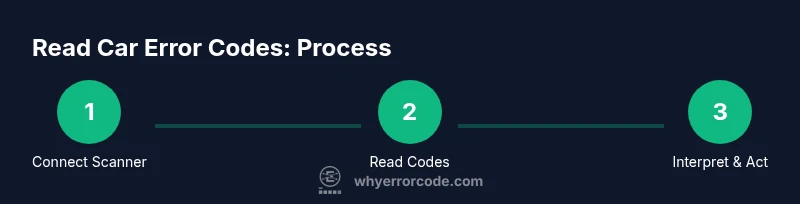
To read car error codes, you’ll need an OBD-II scanner and a basic understanding of code categories. Start by connecting the scanner to the vehicle’s OBD-II port, retrieving codes, and logging any freeze-frame data. Then interpret P/C/B/U codes with trusted guides and document findings to guide diagnostics.
What reading car error codes means and why it matters
When a vehicle’s computer detects a fault, it stores a fault code and often illuminates the check engine light. Reading these codes is the first, critical step in diagnosing a problem. For the user troubleshooting read error code car issues, codes act as a map rather than a final verdict. They point to the general subsystem involved and the likely failure mode, but they never replace hands-on testing. By starting with a code and then gathering context from your vehicle’s behavior, freeze-frame data, and recent maintenance, you can avoid guessing and move toward a precise repair plan. According to Why Error Code, this approach reduces wasted time and helps you stay focused on actionable steps. The goal is to translate a numeric or alphanumeric code into a concrete diagnostic path that blends data and experience.
lengthCheck": 0
Tools & Materials
- OBD-II scanner(Choose a model compatible with your vehicle; ensure it can read P, B, C, and U codes and display freeze-frame data.)
- Smartphone or laptop(To run apps or capture data extras, ensure Bluetooth/Wi‑Fi or USB connectivity is available.)
- Vehicle service manual or reliable online reference(For code definitions and service procedures, use sources that correspond to your vehicle year/model.)
- Personal protective equipment(Gloves and safety glasses for underhood work or battery checks.)
Steps
Estimated time: 45-60 minutes
- 1
Prepare and safety-check
Park the car on a flat surface, engage parking brake, and turn off all accessories. Gather your OBD-II tool and the vehicle manual. If the engine is hot, wait for it to cool to avoid burns.
Tip: Wear gloves; hot components can cause burns, and a clear workspace reduces misreads from clutter. - 2
Locate the OBD-II port
Most passenger cars have the OBD-II port under the dash on the driver side. If you’re unsure, consult the owner’s manual or a service diagram. This step is essential to prevent damage from forcing a connector.
Tip: The port is typically 16-pin; if you can’t find it, verify vehicle year and emissions regulations for your region. - 3
Connect the scanner and power it up
Attach the scanner firmly to the port and turn the ignition to the On position without starting the engine. Let the device power up and connect to the vehicle’s ECU for data retrieval.
Tip: Some scanners require the key-on engine-off state; follow the device’s prompt to ensure a clean read. - 4
Retrieve codes and freeze-frame data
Run a read- codes operation to pull stored P/C/B/U codes. Save any freeze-frame data that accompanies the codes, as this captures engine parameters at the moment the fault occurred.
Tip: If multiple codes appear, start with the primary or pending codes and work outward from there. - 5
Look up code definitions
Use your vehicle manual or a trusted online reference to map each code to its meaning. Note whether there are any manufacturer-specific (special) codes that require dealer-level information.
Tip: Record both a code and its definition; note the subsystem involved (powertrain, emission, body, etc.). - 6
Assess symptom correlation
Compare the fault code with observed symptoms: rough idle, misfires, poor acceleration, or illuminated check engine light. Validate whether the symptom aligns with the suspected subsystem.
Tip: Freeze-frame data can help confirm if the problem was transient or ongoing at the time of fault. - 7
Plan a repair approach
Prioritize fixes by impact and ease. Start with quick wins that could clear codes (sensor reseat, wire inspection) before expensive parts replacements.
Tip: Document steps and potential preventive actions to avoid recurrence. - 8
Clear codes if appropriate and verify
If you performed a repair, clear the codes and restart the vehicle to confirm the light behavior. If codes reappear, revisit steps and consider deeper diagnostics.
Tip: If the light returns quickly, an underlying fault likely remains; don’t ignore repeated reads.
Frequently Asked Questions
What does an engine fault code mean?
A fault code indicates a detected anomaly in a system or sensor. It guides you to the likely area of concern, but it rarely confirms the exact cause without further testing.
A fault code shows that the car detected an issue and it points you to the likely area to inspect.
Can I clear codes myself after the repair?
Yes, many scanners clear codes. However, only do this after you’re confident the issue is fixed and test drive to confirm codes don’t return.
You can clear codes after you’re sure the issue is resolved and you’ve tested the fix.
Do all cars use the same OBD-II codes?
Most cars use OBD-II, but there are manufacturer-specific codes. Always verify with the vehicle’s manual or a trusted reference for your year and model.
Most cars use OBD-II, but some codes are manufacturer-specific, so check your manual.
What if multiple codes appear at once?
Start with the codes most closely linked to the primary symptoms. Some codes may be side effects of a larger issue, so assess the subsystem as a whole.
If you see several codes, focus on the ones tied to the main symptoms first.
Is it safe to drive with the check engine light on?
It depends on symptoms and codes. If there’s loss of power, misfire, or fuel smell, limit driving and seek diagnostics. Severe issues require immediate attention.
Drive cautiously and seek diagnosis if there’s power loss, misfiring, or unusual smells.
How often should I read codes for maintenance?
Use codes as part of routine diagnostics after service or abnormal symptoms. Regular checks can catch issues early before they become costly.
Check codes after service or if you notice symptoms; it helps catch problems early.
Watch Video
Top Takeaways
- Identify the fault code family first (P, B, C, U).
- Combine code data with freeze-frame context for accuracy.
- Document findings and test suspected fixes before replacing parts.
- Clear codes only after a verified repair; recheck after driving.
- Know when to escalate to a professional.