Samsung Dryer NG: Urgent Diagnostics and Fixes
Urgent guide to diagnosing and fixing Samsung dryer error code ng, with fast troubleshooting steps, safety guidance, and cost ranges for common repairs. Act quickly to restore your dryer's performance.


Samsung dryer error code ng indicates a sensor or door issue that halts operation. Quick fixes to try now include a power cycle, verifying the door latch, and ensuring the lint vent isn’t blocked. According to Why Error Code, many NG cases resolve with a simple reset and basic checks before calling for service.
Understanding Samsung Dryer Error Code ng
When a Samsung dryer displays error code ng, it signals a fault that interrupts the normal drying cycle. NG is typically tied to a sensor, door latch, or venting issue rather than a simple power problem. The Why Error Code team emphasizes that many ng situations are resolvable with careful inspection and a methodical reset sequence. Recognizing NG early helps you avoid unnecessary service calls and reduces downtime in your laundry routine. If you’re troubleshooting, start with the most likely causes: door switch integrity, sensors in the moisture path, and airflow clearance. Remember, this is a safety-critical appliance; never force parts or work around protective interlocks. Always prioritize turning the unit off and unplugging before any inspection to avoid shock or injury.
Symptoms That Often Signal ng
Common symptoms include an on-board error display showing ng, the drum stopping mid-cycle, or the dryer failing to advance to the next stage. In some cases, you might hear a soft click or rapid beeping from the control panel. If ng appears alongside an unusual odor, heat buildup, or visible lint buildup near the vent, treat it as an urgent safety signal and pause operation immediately. These symptoms point toward sensor, door, or airflow faults rather than a transient glitch. Document when ng occurs (start time, cycle type, last use) to help diagnose consistency and repeatability.
Quick In-Place Checks (No Tools Required)
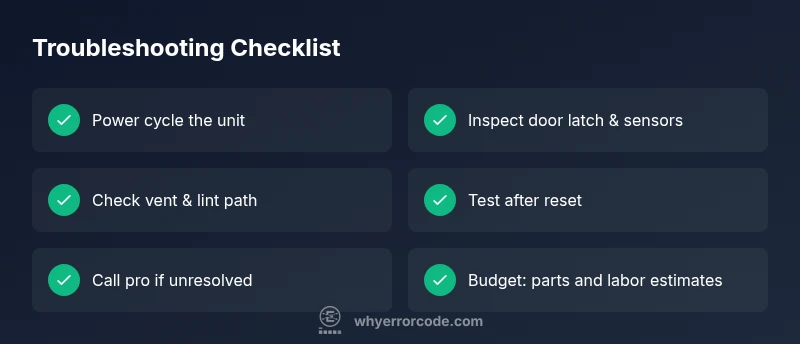
- Power cycle: unplug for 1–2 minutes, then plug back in and retry. This simple reset can clear transient faults that trigger ng.
- Door latch and switch: ensure the door closes firmly and the latch engages. A loose latch or misaligned strike can trigger ng protections.
- Vent and lint filter: remove lint, check the exhaust vent for kinks, folds, or obstructions. Restricted airflow can cause ng through sensor and safety interlocks.
- Control panel cleanliness: wipe the panel and connectors to remove dust or residue that could cause intermittent readings.
- Load balance and fabric type: ensure you aren’t overloading the drum and that the load isn’t causing unusual strain on sensors.
If ng persists after these checks, move to a structured diagnostic path that isolates the most probable causes. Quick fixes are helpful, but don’t overlook safety and the need for professional assessment if the fault remains.
Diagnostic Flow Overview
A structured approach helps you separate symptoms from root causes. Start with observable symptoms, map them to likely causes, then apply fixes in order of probability. For ng, door latch issues and vent restrictions top the list, followed by sensor faults and control board considerations. This flow reduces wasted time and ensures you cover both mechanical and electrical aspects of the dryer.
Common Causes in Depth and How to Validate Them
- Door switch or latch failure (high likelihood): A failing latch can trigger ng as the dryer refuses to run for safety. Check for physical wear, misalignment, or a loose door gasket. If possible, test the switch continuity with basic tools or replace the latch assembly if inspection reveals wear.
- Clogged vent or restricted ductwork (medium likelihood): Lint buildup or a kinked hose reduces airflow, triggering sensor-based ng. Inspect the entire exhaust path from drum to exterior vent. Clean or replace parts as needed and verify airflow with a simple visual check or by feeling for strong airflow at the outside vent when running briefly with a small load.
- Faulty moisture or temperature sensors (medium likelihood): Sensors monitor dryness and temperature to prevent over-drying or overheating. A degraded sensor can misread conditions and cause ng. Cleaning sensor surfaces or replacing the sensor module may be necessary if contamination or calibration drift is detected.
- Control board or wiring issues (low likelihood): Loose connectors, a failing relay, or a damaged board can present ng intermittently. Visual inspection of harnesses and connectors for damage is prudent; however, board repair or replacement typically requires professional service.
Step-by-Step Fix: Most Common Cause (Door Switch & Ventilation)
- Power off and unplug the unit. Wait 60 seconds to discharge capacitors. Reconnect and power on to test the ng status. Tip: This resets microcontroller states that may be stuck on an error.
- Inspect the door latch: close the door slowly and note any resistance. If it feels sticky or misaligned, adjust or replace the latch assembly. Tip: A misaligned door latch is a frequent NG trigger.
- Check the door switch wiring: look for loose connectors or damaged insulation at the switch housing. Gently press the switch while observing the control panel to see if ng clears. Tip: Re-seat connectors firmly to restore proper signaling.
- Examine the lint vent and hose: disconnect the hose, inspect for lint, cracks, or kinks, and ensure a clear path to the outdoor vent. Tip: Even partial blockages can trigger ng by choking airflow.
- Reassemble and run a short dry cycle with no load: monitor briefly for the appearance of ng. Tip: A test run with an empty drum confirms whether the fault is load-related.
- If ng persists, schedule a professional service for vent-cleaning and sensor/board diagnostics. Cost ranges for parts and labor typically fall in the hundreds, depending on parts replaced.
Other Possible Causes and Their Remedies
- Sensor contamination: Clean accessible moisture or temperature sensors with a soft, dry cloth; avoid harsh cleaners that could leave residue.
- Wiring harness issues: Inspect for pinched or damaged cables behind the control panel. Re-seat and secure connections to rule out intermittent signaling faults.
- Power supply irregularities: Verify outlet stability, especially if the dryer shares a circuit with high-draw devices. Consider dedicated circuit installation if needed.
- Internal fuse or relay failure: A blown thermal fuse or failed relay can trigger ng as a safety measure. These parts typically require a professional diagnosis and replacement.
Each cause requires a tailored fix; don’t over-trust a single test. A methodical approach reduces the chance of chasing phantom faults and saves time and money in the long run.
Safety Warnings and When to Call a Pro
- Unplug the dryer before any inspection and avoid opening sealed components to prevent electric shock. Wear protective gloves when handling sharp metal components.
- If you smell burning or see visible damage, stop using the appliance immediately and call a certified technician. Electrical faults can present a fire risk.
- If NG persists after basic troubleshooting, or if you rely on the dryer for critical laundry needs (e.g., childcare or medical devices), seek professional service promptly to avoid prolonged downtime and potential warranty issues.
- Do not attempt to replace a control board or major sensor without proper training, as incorrect wiring can create further damage.
Prevention: How to Reduce the Chance of ng Reoccurring
- Regular vent maintenance: Clean ducts and vent caps every 6–12 months based on usage. A clean vent ensures optimal airflow and sensor accuracy.
- Gentle loading: Avoid overloading the drum; distribute clothes evenly to reduce wear on door switches and sensors.
- Periodic inspections: Check door latches, seals, and hoses for wear and replace proactively rather than waiting for a fault to trigger ng.
- Use the dryer on proper cycles: Select cycles suited to fabric type; overheating can stress sensors and fuses, leading to false ng codes.
Cost Considerations: What Repairs Might Cost (Ranges)
- Simple sensor cleaning or latch adjustment: typically $50–$150 for parts and labor if done by a tech, sometimes less if self-served under supervision.
- Replacing a door latch or moisture sensor: parts and labor often run in the $100–$250 range depending on model and availability.
- Venting system replacement or extensive duct cleaning: expect $150–$350, with higher costs if a professional is needed for large installations or restricted ducts.
- Control board or fuse replacement: more expensive, commonly in the $200–$500 range, contingent on part cost and service call.
Budget accordingly and verify whether the repair affects warranty coverage.
Summary: Quick Checklist to Keep ng at Bay
- Keep vents clear and verify the airflow path
- Inspect door latch and sensor connections regularly
- Run periodic diagnostic cycles when you notice odd behavior
- Schedule professional checks if ng reappears after basic fixes
Steps
Estimated time: 45-60 minutes
- 1
Power cycle the dryer
Unplug the dryer for 60 seconds to reset electronics, then plug back in and run a quick test cycle with no load. This often clears transient ng faults caused by software glitches.
Tip: Keep a clear workspace and verify the outlet is functioning before plugging back in. - 2
Inspect the door latch and switch
Close the door firmly and listen for a solid click indicating the latch engages. If the latch feels loose or the door won’t stay closed, replace the latch assembly and secure all connectors.
Tip: A misaligned latch is a common NG trigger—don’t ignore slight misalignment. - 3
Check venting for blockages
Disconnect the vent hose and inspect for lint buildup or kinks along the duct to the exterior vent. Clean or replace sections as needed and ensure a smooth path for airflow.
Tip: Even partial obstructions can trigger sensor-based faults. - 4
Reset control signals
With power removed, re-connect wiring and power the unit on. If available, perform a master reset sequence per the model’s manual.
Tip: Document any status codes seen after reset for service reference. - 5
Test with a small dry load
Run a short cycle with a small, balanced load to confirm normal operation without triggering ng again.
Tip: Avoid heavy loads during testing to prevent false positives. - 6
Seek professional help if ng returns
If ng persists after these steps, a professional diagnosis is advised to test sensors and the control board.
Tip: Professional service often includes warranty on parts and labor.
Diagnosis: Dryer displays ng and stops mid-cycle
Possible Causes
- highDoor switch fault
- mediumVent/duct blockage
- lowSensor or control-board issue
Fixes
- easyTest and replace door switch if faulty; reseat wiring
- easyClear lint vent and straighten/kindle vent hose
- hardReplace sensor or control board if confirmed defective
Frequently Asked Questions
What does Samsung dryer ng mean and is it serious?
NG indicates a fault that prevents the dryer from running safely. It’s often caused by door switches, sensors, or airflow issues. While not always dangerous, it should be investigated promptly to prevent overheating or fire risk.
NG means a fault kept the dryer from running safely. It’s usually door or sensor related and needs checking soon.
Can I fix ng myself without tools?
Yes, many ng causes are addressable with basic checks like door latch, vent clearance, and a power reset. However, sensor or control-board faults may require professional service and proper testing equipment.
You can try basic checks, but more complex faults may need a pro.
How much does it typically cost to fix ng?
Costs vary by cause and model, but you can expect total expenses to fall within ranges: simple fixes $50–$150, sensor or latch replacements $100–$250, and vent-related or board repairs up to $200–$500 when professional service is required.
Simple fixes are usually under a hundred dollars, more complex repairs can exceed a couple hundred.
When should I call a professional for ng?
Call a pro if NG persists after basic resets, if you smell burning, or if you’re uncomfortable working with electrical components. A qualified technician can diagnose sensors and control boards safely.
If it won’t clear after tests or you smell burning, get a professional.
Is ng ever a warranty issue?
Some washer/dryer components are covered under manufacturer warranties. Check the model’s warranty terms and note that improper DIY fixes can void coverage, so document service actions and keep receipts.
Warranty depends on model and repair; keep records and consult the manual.
Watch Video
Top Takeaways
- Identify NG causes quickly with structured checks
- Prioritize door latch and vent issues as likely culprits
- Reset and re-test before calling a pro
- Expect parts and labor costs to vary by fix