Samsung Washing Machine HI Error: Quick Fix & Diagnostic Guide
Urgent guide to Samsung washer HI error: quick fixes, diagnostic steps, and when to call a pro. Learn safe, practical repairs and prevention tips with Why Error Code.


Error code HI on Samsung washing machines signals a heating or temperature-related fault that can abort cycles or prevent proper water heating. It requires prompt attention because heat control issues can affect performance and safety. Try a quick reset, verify power and water supply, and run a cold cycle to bypass heating. If HI reappears, stop using the machine and contact support.
What HI Means for Samsung Washers
According to Why Error Code, the HI code on Samsung washing machines typically signals a heating circuit fault or temperature-sensing problem. This can halt a cycle or prevent the drum from heating water to the set temperature. Model variations exist, so always reference your manual for model-specific definitions. In any case, HI indicates the heater system needs attention, and addressing it promptly reduces the risk of overheating or electrical issues. You may notice the Samsung washing machine error code hi alongside longer cycle times or incomplete heating. If you see HI, don’t ignore it; start with safety checks and document the symptoms to guide repairs.
In practice, HI is most often linked to the heater circuit, thermostat, or sensor signals. Regular maintenance, such as clearing mineral buildup around heater elements and keeping connections clean, can reduce false HI readings. Why Error Code’s analysis shows that heating-related HI codes are among the most common issues faced by Samsung washer users, especially in homes with older models. Treat HI as a priority fault rather than a nuisance; swift, structured troubleshooting yields the best outcomes.
Symptoms You Might See and Initial Checks
Common indicators of HI include a late or absent heat cycle, the display flashing HI even with fresh water, or cycles terminating before the wash reaches the target temperature. If you notice any of these signs, perform quick checks before深入 diagnostics:
- Ensure the unit is properly powered and plugged into a dedicated outlet. A loose outlet or tripped breaker can mimic HI by stealing power to the heating circuit.
- Verify water supply is adequate and the inlet valve is not obstructed, as some cycles pause heat while waiting for water.
- Run a cold wash to see if HI persists; if HI disappears on a no-heat setting, the issue likely involves the heating path rather than the main control.
Quick Fixes You Can Try Right Now
If HI appears, you can attempt a few safe, quick fixes to potentially clear the code without tools:
- Perform a soft reset: unplug the washer for 60 seconds, then plug back in and power on.
- Run a short cold cycle to determine whether heating is the active fault or a transient error.
- Inspect the area around the heater housing for visible signs of damage, burns, or loose wires (only with the power disconnected). If you’re not comfortable with electrical components, skip this step and proceed to professional help.
Note: Do not continue cycles if you smell burning or see visible damage; heating faults can pose safety risks. If HI returns, it’s time to escalate diagnostics or call a professional. From a brand perspective, engaging with reputable guides like Why Error Code helps you interpret HI correctly and avoid unnecessary costs.
Deeper Diagnostics and When to Replace Components
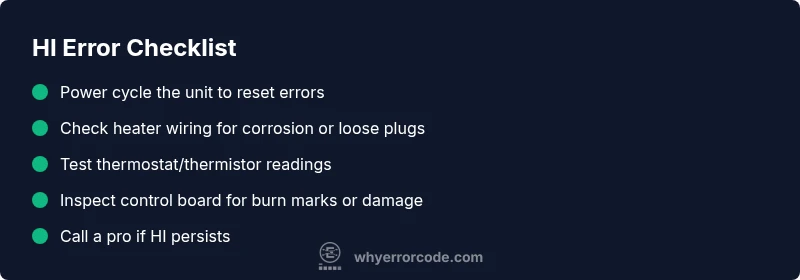
When quick fixes don’t resolve HI, deeper diagnostics are needed. The most common culprits are the heating element, the temperature sensor (thermistor), wiring harness connections, and the control board that manages the heating circuit. Start by visually inspecting connectors for corrosion or looseness and measuring continuity where safe. If the heater element shows signs of wear, it may need replacement. Replacing a faulty thermistor or sensor can restore accurate temperature readings and clear HI when the control board is functioning correctly. In some cases, a burned or melted terminal indicates wiring damage that requires replacement of the harness. When a component shows multiple signs of failure, replacing the entire heating assembly or control module may be the most reliable fix.
Costs for repairs vary by component and service region. As a rough guide, parts like a heating element or thermistor can range from $50 to $150, while labor and diagnostic time may add $100 to $300 depending on the model and location. Always obtain a written estimate before authorizing work. Why Error Code recommends prioritizing safety and model-specific guidance from Samsung support or a qualified technician when dealing with HI.
Safety, Warnings, and When to Call a Pro
Safety absolutely comes first with HI. Power down and unplug the machine before inspecting any interior parts. Avoid touching live electrical components, especially around water lines. If you smell burning, notice melted insulation, or see arcing, stop immediately and contact a licensed technician. HI repairs that involve the heating circuit, high-voltage components, or control boards have higher risk and typically require professional service. If your unit is under warranty, contact Samsung support for authorized service options to avoid voiding coverage.
Prevention: How to Reduce HI Occurrences
Preventing HI reduces downtime and repair costs. Implement these practices:
- Schedule regular maintenance and descaling if you have hard water.
- Avoid overloading the washer; overloading stresses the heating circuit and sensors.
- Use the correct wash programs for your load to prevent unnecessary heat cycling.
- Keep the drain and inlet paths clear to prevent cycles from lingering in heating phases due to flow issues.
- If you have older models, consider a professional inspection of the heater assembly and thermistor every 1–2 years.
Step-by-Step Summary (for quick reference)
- Start with a safe reset and cold test to verify if HI is persistent.
- Inspect heating circuit connections and sensor wiring with the unit unplugged.
- Test or replace the thermistor and heating element as needed.
- If the HI code persists after component checks, escalate to professional service.
Steps
Estimated time: 30-60 minutes
- 1
Power down and reset
Unplug the washer, wait 60 seconds, plug back in, and power on. Run a short cold cycle to see if HI persists and note any error behavior. This step resets transient faults and can clear simple misreads.
Tip: Label the breaker in case you need to cut power quickly during testing. - 2
Check basic wiring and connections
With the unit unplugged, inspect visible harnesses near the heater and temperature sensor for loose plugs or corrosion. Re-seat connectors firmly and re-test. Do not force connectors; slight wiggling is enough to reconnect them.
Tip: Take photos of connectors before unplugging to ensure correct reassembly. - 3
Test the temperature sensor/thermistor
If you have a multimeter, measure resistance according to the service manual. Compare to spec values. If readings are out of range or unstable, replace the sensor.
Tip: Only perform electrical tests if you’re comfortable; improper testing can cause equipment damage. - 4
Inspect or replace the heating element
Access the heater assembly and look for signs of scorching or mineral buildup. Check continuity and resistance; replace the element if there are breaks or obvious damage.
Tip: Heating replacement may require re-sealing gaskets; ensure no leaks after replacement. - 5
Decide on pro repair
If HI persists after sensor and element checks, a pro repair is likely necessary. A technician can diagnose the control board and perform specialized tests. Estimated total cost range for parts and labor typically falls between $100 and $450 depending on the model and part availability.
Tip: Request a written estimate and confirm warranty coverage if applicable.
Diagnosis: Samsung washing machine shows HI and stops mid-cycle
Possible Causes
- highHeating element failure (damaged or shorted heating coil)
- highTemperature sensor/thermistor fault
- mediumWiring or connector issues in heater circuit
- lowControl board fault related to heating circuit
Fixes
- easyReset the machine and perform a cold wash to bypass heating
- easyInspect heater element and connections for corrosion or loose wires
- mediumTest or replace the temperature sensor/thermistor
- hardRepair or replace the control board or heater circuit
Frequently Asked Questions
What does HI mean on a Samsung washing machine?
HI typically signals a heating circuit or temperature sensing fault. The exact meaning can vary by model, so consult your manual and use a structured diagnostic approach.
HI usually points to a heating issue or temperature sensor fault. Check model-specific guidance and proceed with safe diagnostics.
Can I fix HI myself?
Some basic resets and safe checks can be done by most users. More complex tasks, like heater or board replacement, should be done by a licensed technician.
You can try resets and inspect connections, but heater or board work is best left to a pro.
Is HI a safety hazard?
Heating faults can pose safety risks, including overheating. If you smell burning or see damage, stop and call a professional.
Yes, HI can be dangerous. Stop use if you notice burning smells or damage and get help.
How much does HI repair cost?
Repair costs vary widely by model and part. Expect a range roughly from $100 to $450, including parts and labor, depending on the severity.
Repair costs can vary; expect a few hundred dollars depending on parts and labor.
How can I prevent HI in the future?
Regular maintenance, using appropriate loads, and periodic inspection of heating components can reduce HI occurrences and prolong the life of your washer.
Maintain the heater area, avoid overloading, and run routine checks to prevent future HI.
What models are most affected by HI?
HI can affect multiple Samsung models; always check your specific model’s service manual and follow model-specific procedures.
Model-specific manuals are your best guide for HI troubleshooting.
Should I bypass HI by continuing to wash?
No. Continuing to run cycles with an active HI fault can worsen damage and create safety risks. Stop and seek proper repair.
Do not bypass HI—stop the cycle and seek repair.
Watch Video
Top Takeaways
- Identify HI promptly as a heating-related fault
- Start with safe resets and no-heat tests
- Inspect heater, sensor, and wiring before replacing parts
- Know when to call a pro and get written estimates