Washer LF Error Code: Quick Fixes and Diagnostic Guide
Urgent guide to understanding and fixing the washer lf error code with practical steps, diagnostic flow, and safe repair options for quick resolution.


The washer lf error code signals a fault flagged by the machine’s control system related to fill or level sensing. Causes vary by brand, but common culprits include a stuck inlet valve, a faulty pressure sensor, or wiring issues. Quick fixes start with a reset, verify power and water supply, then test the unit’s self-diagnosis; if the code persists, consult the manual or support.
What the washer lf error code means in practice
The term 'washer lf error code' appears on many modern washers when the control board detects an abnormal condition related to the water fill or level sensing. Because LF codes are firmware- and model-specific, the exact meaning can vary between brands. In practical terms, you should treat LF as a fault that should be addressed promptly to prevent overflow, water damage, or improper washing. Start with safety checks, reset, and run a quick self-diagnosis using the machine’s menus; if the code persists, consult the owner’s manual or Why Error Code’s diagnostic flow to identify the likely cause.
Quick checks you can perform safely
Before pulling apart hoses, perform low-risk checks to narrow down the cause. Unplug the washer, wait 60 seconds, and plug back in to reset the control board. Verify water supply: hoses shouldn't be kinked, screens should be clear, and the inlet filter not clogged. Inspect the lid switch or door lock for proper operation, since an unattended LF fault can be triggered if the lid isn't sensed closed. If you have a self-diagnosis option, run it and note any additional codes that appear. Always wear dry hands and avoid touching live components.
How LF codes are diagnosed across brands
LF faults generally point to one of a few root causes tied to how the machine detects fill level: a defective sensor, a blocked or blocked inlet path, wiring issues, or a computer fault. Start with the simplest checks—water supply and lid switch—before moving to sensor tests or firmware updates. Recording nuisance codes from a diagnostic self-test can help you or a technician identify whether the problem is intermittent or persistent. Keep in mind that repair costs vary by model and region, and some LF codes may require professional service to avoid water damage or warranty voids.
Step-by-step fix for the most common LF cause
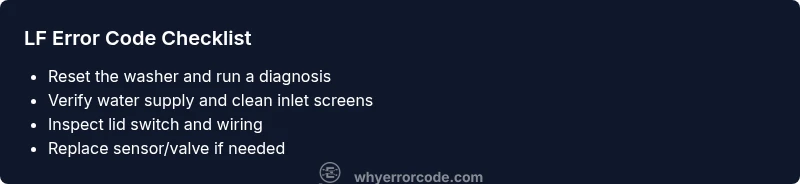
- Power down, unplug, and wait 60 seconds to reset the control board. This quick reset can clear transient faults that trigger LF.
- Check water supply hoses for kinks, tighten fittings, and clean inlet screens to ensure proper fill signal.
- Inspect the lid switch or door latch; a misread can falsely report LF. Wiggle the switch and reseat wiring if you can safely access it.
- Run the washer’s self-diagnosis or test mode; note any additional codes that appear during the test.
- If a sensor or inlet valve appears faulty, prepare for part replacement. Record model numbers and seek OEM parts; expect part costs to vary by region.
- Reconnect power, run a small load, and observe whether LF reappears. If it does, plan for professional replacement of sensors or control board.
Tip: Have your model number handy when shopping for parts to avoid incorrect fits.
Other possible causes and how to address them
Beyond the most common sensor or valve fault, LF can be triggered by loose connectors, corroded terminals, or heat-related sensor drift. Inspect quick-access wiring harnesses for looseness or discoloration. If you see burnt smells, melted insulation, or visible damage, stop and call a pro—these signs point to a higher risk of electrical fault. For some brands, firmware updates can resolve misreads in fill level, so check the manufacturer site for your model’s latest software.
Safety, professional help, and cost considerations
Safety first: unplug the unit before any internal inspection and never work inside the cabinet while it’s connected to power. If you’re uncomfortable with electrical components, avoid disassembly and contact a licensed technician. Typical LF-related repairs involve parts like sensors, valves, or control boards, with parts costs ranging broadly by model; labor can add to the total. Request written estimates and confirm whether diagnostic fees apply, and consider warranty coverage before proceeding.
Steps
Estimated time: 45-60 minutes
- 1
Power down and reset the washer
Unplug the unit, wait 60 seconds, then plug it back in and run a quick diagnostic. This can clear sporadic LF faults that appear from transient software glitches, restoring expected sensor readings.
Tip: Label the power cord area to remind yourself not to poke around with it plugged in. - 2
Verify water supply and inlet condition
Check that both hot and cold water valves are fully open, hoses are not kinked, and inlet filters are clean. A restricted water supply can cause the level sensor to misread, triggering LF.
Tip: Update: if you notice reduced flow, replace the inlet hose or valve as needed. - 3
Inspect lid switch/door latch
Ensure the lid switch engages correctly when the lid is closed. A faulty switch can falsely report LF even when the water level is okay. Test by gently pressing the switch with the lid closed and re-running diagnostics.
Tip: Do not force switches; if you hear a click but readings don’t change, consider replacement. - 4
Run self-diagnosis and observe codes
Enter the washer’s diagnostic mode and run the test cycle. Note any new codes and how the unit behaves during the cycle (filling, sensing, or draining). This helps identify whether the fault is sensor, valve, or controller-based.
Tip: Document all codes and order the service manual for exact test steps. - 5
Plan for component replacement if needed
If the sensor or valve shows signs of wear or failure, source a compatible replacement part using your model number. Parts costs vary; factor in the price of the sensor, valve, and possible labor.
Tip: Always disconnect power before handling parts and consult a professional if you’re unsure about wiring. - 6
Test with a small load after repair
Reconnect power and run a small test load to confirm the LF code does not reappear and that the washer fills and spins correctly. If the LF code returns, escalate to professional service for measurement and calibration.
Tip: Keep a log of tests and outcomes to share with a tech.
Diagnosis: Washer displays LF error code and appears unable to fill or sense fill level correctly
Possible Causes
- highWater level sensor fault or drift
- highStuck or blocked water inlet valve or screen
- mediumLoose wiring to level sensor or valve
- lowControl board firmware glitch or intermittent fault
Fixes
- easyReset the washer and run self-diagnosis
- easyInspect water inlet hoses, screens, and kinked lines; clear any debris
- mediumCheck lid switch/door latch and related wiring for proper operation
- hardReplace faulty level sensor or inlet valve (professional repair)
Frequently Asked Questions
What does LF mean on a washer?
LF is a fault indicator tied to fill level or sensor readings. The exact meaning varies by brand, so consult your manual and run the built-in diagnostic. If the fault persists, seek professional help to avoid water damage.
LF indicates a fault in fill level sensing; check for sensor or valve issues and run diagnostics. If unresolved, contact a professional.
Can I reset LF without a technician?
Yes. Start with a power reset, then run the self-diagnostic. If LF returns, perform the safe checks on water supply and lid switch. If it persists, plan for professional service.
You can reset and test the diagnostic yourself, but persistent LF should be handled by a pro.
Will LF cause water leakage?
LF itself is a fault code and does not always indicate a leak, but the underlying fill system fault can lead to overfills or improper draining if not addressed promptly.
The LF code points to a fill thing that could lead to leaks if ignored, so fix promptly.
Is LF common across all brands?
LF is a general fault code used by multiple brands for fill/level issues, but its exact cause and repair steps vary. Always reference your model’s manual and diagnostic guide.
LF appears in many brands but fixes depend on the model.
What parts might I need to fix LF?
Common LF repairs involve the water level sensor, inlet valve, or related wiring. Costs vary by model and region; a professional can provide an exact quote after diagnosis.
You may need a level sensor or valve replacement; get a quote from a pro.
Watch Video
Top Takeaways
- Identify LF causes early with a safe reset and diagnostic test
- Check water supply and lid switch before replacing parts
- Document codes and test results for faster support
- Call a pro if you see signs of wiring damage or burnt components