EC Error Code on Hot Tub: Diagnosis, Fixes, and Prevention
Learn how to diagnose and fix the EC error code on hot tubs with a clear safety plan, diagnostic flow, step-by-step repairs, cost ranges, and professional guidance.


EC error code on hot tub indicates an electrical safety fault detected by the control system, typically tied to sensor connections or a faulty circuit. The quickest path to safety is to power down the unit, unplug it, and inspect for water intrusion, loose wires, or damaged connectors. If the code persists after a safe reset, consult the manual or contact a professional.
EC Error Code Meaning and Immediate Safety Steps
The EC error code is a safety indicator from your hot tub's controller. It typically signals an electrical fault that could involve sensors, wiring, or a control module. If you see the ec error code on hot tub, safety first: power down at the breaker, unplug if accessible, and inspect for obvious hazards such as exposed wires or water intrusion near electrical components. Do not operate the tub with the code active. Consult the owner’s manual for model-specific details and contact a licensed technician if you cannot identify a safe, obvious cause. This is about protecting you, your family, and the equipment from potential electric shock or further damage.
Why this matters: EC codes are designed to prevent unsafe operation. A quick shutdown reduces risk while you assess the situation. Always verify that the tub is de-energized before touching any internal components. If you smell burning insulation or hear buzzing, leave the area and call a pro immediately.
Common Causes of EC Codes in Hot Tubs
EC codes arise from a mix of sensor, wiring, and control-board issues. The most frequent culprits include loose or corroded sensor connections, a failing temperature sensor or high-limit switch, water intrusion into the control cabinet, or a degraded control board that misreads inputs. Less common but possible are damaged wire harnesses or improperly seated connectors after maintenance. Understanding these common causes helps you prioritize checks without unnecessary part replacements. Always rule out simple electrical hazards (wet surroundings, damaged plugs) before diving into component inspection.
Diagnostic Checklist: What to Inspect
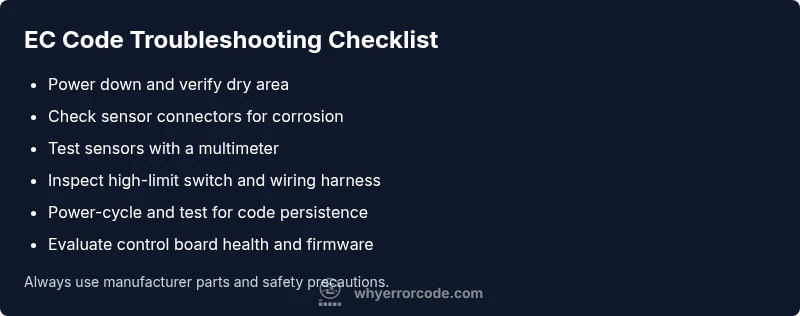
To systematically diagnose an EC error, start with the basics and move toward the more involved components. Begin by powering down and disconnecting power, then visually inspect the area around the control cabinet for moisture or corrosion. Check sensor connections at the main control board and at each temperature sensor; reseat connectors firmly and look for damaged insulation. Use a multimeter to test sensor resistance and verify that readings are within the expected range per your model’s manual. If you find a damaged wire or connector, replace it or secure it properly. Finally, inspect the high-limit switch and the control board for burn marks or signs of failure. Document the exact code text, any sounds, and when the error occurs to help a technician pinpoint the root cause.
Costs, Repairs, and When to Hire a Pro
Repair costs for EC errors vary widely by model and fault, typically ranging from inexpensive sensor replacements to full control-board service. Expect parts to range from roughly $50 to $200 for sensors and connectors, with labor and possible board replacement bringing the total closer to $200-$700 depending on the complexity and service area. If you’re comfortable with basic electrical work and the fault appears tied to a sensor or wiring harness, a DIY repair might be possible, but significant faults like a faulty control board require a licensed technician. Always verify warranty terms and request an itemized estimate before authorizing work.
Prevention and Long-Term Safety
Preventing EC codes should focus on moisture control, secure wiring, and regular maintenance. Keep the control cabinet dry and away from splashes; reseal any openings that could allow humidity ingress. Schedule periodic inspections of sensors, connectors, and the high-limit switch, especially after service or relocation of the spa. Use only manufacturer-approved parts and follow torque specifications when tightening screws to avoid loosening over time. Finally, maintain a running log of errors and service actions to catch recurring issues early and minimize downtime.
Steps
Estimated time: 60-90 minutes
- 1
Power down and isolate power
Turn off the hot tub at the breaker and unplug if safely accessible. Verify the area is dry and there are no signs of water intrusion around electrical components. Keep a safe distance from the cabinet while inspecting cables. This step reduces the risk of shock and prepares you for inspection.
Tip: If you must handle the cabinet, ensure your hands are dry and you’re standing on a non-conductive surface. - 2
Inspect sensor connections
Open the control cabinet and locate the main temperature sensor and any secondary sensors. Reseat each connector firmly, inspect for corrosion, and wipe away any corrosion residue with a dry cloth. Look for frayed wires or loose terminals and secure them using the appropriate torque from the manual.
Tip: Take a photo before disconnecting anything to document original wiring. - 3
Test sensors with a multimeter
With the power still off, test sensor resistance or voltage as specified in the manual. Compare readings to the expected range. If readings are out of range, replace the affected sensor or component. Reassemble the cabinet and ensure no tools remain inside.
Tip: If you’re unsure about the correct resistance values, consult the model-specific service sheet. - 4
Check the high-limit switch and wiring harness
Inspect the high-limit switch for signs of sticking or damage. Verify continuity and inspect the harness for abrasion. If the switch is faulty, replace it and re-check system operation.
Tip: Avoid forcing components; gentle reseating often resolves intermittent contact issues. - 5
Power cycle and test
Reconnect power and reset the spa according to the manual. Observe for the EC code and confirm if the system returns to normal operation after a controlled reset. If the code returns, document the exact sequence and consider a professional evaluation.
Tip: Run a short heat test to confirm proper operation before regular use. - 6
Evaluate control board health
If sensor checks pass but the EC code persists, the issue may lie with the control board or its firmware. Update firmware if an update is available, or replace the board if necessary. This step is typically the point where a professional is recommended.
Tip: Firmware updates can fix misreads; always use official firmware and tools.
Diagnosis: EC error code appears on display; tub may stop heating or cycle
Possible Causes
- highLoose or corrosion-prone sensor connections
- mediumFaulty temperature sensor or high-limit switch
- lowControl board communication error
Fixes
- easySecure and clean sensor connections; reseat the harness
- mediumReplace faulty temperature sensor or high-limit switch
- hardPower-cycle the control board or replace the control board
Frequently Asked Questions
What does EC mean on a hot tub and how serious is it?
EC stands for electrical safety fault detected by the spa controller. It indicates a potential risk to users and equipment and should be addressed promptly with safety first.
EC means there's an electrical safety fault. Address safety first and consult the manual or a professional if unsure.
Can I reset the EC code myself?
A safe reset can clear transient faults, but if the code returns, don’t operate the tub. Re-test after addressing any obvious hazards and consult the manual or a pro if the issue persists.
Yes, trying a safe reset can help, but don’t run the tub if the code returns. Seek professional help if needed.
Which parts are commonly involved with EC codes?
Sensors (temperature sensors and high-limit switches), wiring harnesses, and the control board are the typical components involved in EC codes. Visual checks and continuity tests help identify the failing part.
Usually sensors, wiring, or the control board. Check those areas first.
How much will EC-related repairs cost?
Repair costs vary by fault and model. Expect parts from $50-$200 and total repair costs (including labor) in the $200-$700 range depending on complexity and region.
Costs can range from a few hundred to several hundred dollars, depending on the fault and labor.
When should I call a professional for an EC code?
Call a professional if the EC code persists after a safe reset, if there is water exposure, burning smells, or you’re uncomfortable performing electrical inspections.
If resets don’t clear it or you see moisture or signs of damage, call a pro.
Watch Video
Top Takeaways
- Power down before inspection and reassembly.
- EC codes point to sensors, wiring, or the control board.
- Follow a documented diagnostic flow to avoid unnecessary parts replacement.
- Call a professional if the code recurs after a safe reset or if there are moisture signs.