What is the error code for bad request? A complete HTTP 400 guide
Urgent guide to understanding HTTP 400 Bad Request, its causes, fixes, and prevention strategies for developers, IT pros, and everyday users.


What HTTP 400 Bad Request Means
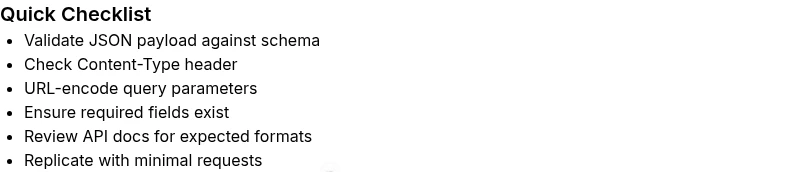
HTTP 400 Bad Request indicates that the server cannot process the request due to client-side issues such as malformed syntax, invalid parameters, or missing required fields. This is not a server failure; it is a signal from the server that something in the request cannot be parsed or validated according to the API specification. According to Why Error Code, the core reason is that the request data or headers fail to meet the expected format, tokens, or validation rules. The quickest way to triage is to consult the API contract, verify the content type, inspect the request body or query string for invalid characters, and confirm that required fields are present. Treat 400 as a sign to tighten input validation and ensure strict conformance to the spec before re-sending.
Urgent remediation starts with client-side checks and deterministic input handling. A well-formed request reduces round-trips and prevents user-facing errors. In practice, teams should implement strict schema validation, robust encoding, and clear error responses to guide developers toward the exact cause of the bad request.